Ever wondered if the simple act of breathing could be a game-changer for your blood pressure? It might sound too good to be true, but science says otherwise.
Infact, a regular breathing practice may reduce blood pressure as much as taking medication, and deep breathing for just a few minutes a day can lower blood pressure by up to 10 points according to Harvard Medical School.
When you make breathing conscious, rather than it being a biological process that just happens automatically around 22,000 each day, you gain a powerful tool at your fingertips!
An extended exhalation can become a magical cue that shifts you from overdrive to mental spa day in less time than it takes to make a cup of tea. As yogis have known for thousands of years: learning to master your breath gives you mastery of your body, and your life.
So if you’d benefit from zen on demand, anytime, anywhere – less stress and more relaxation, lower blood pressure, and a bountiful flow of feel-good hormones in your day to day – then read on because we are going to delve into how you can use simple exercises to reduce your blood pressure and also usher in a host of health benefits by practising breathwork.
This article explores:
The science behind breathwork and how it affects blood pressure.
The dangers of “over-breathing”.
How breathing can lower blood pressure.
Whether breathwork is as affective as blood pressure medication.
5 Breathing exercises that help lower blood pressure.
The Science Behind Breathwork and How it Affects Blood Pressure
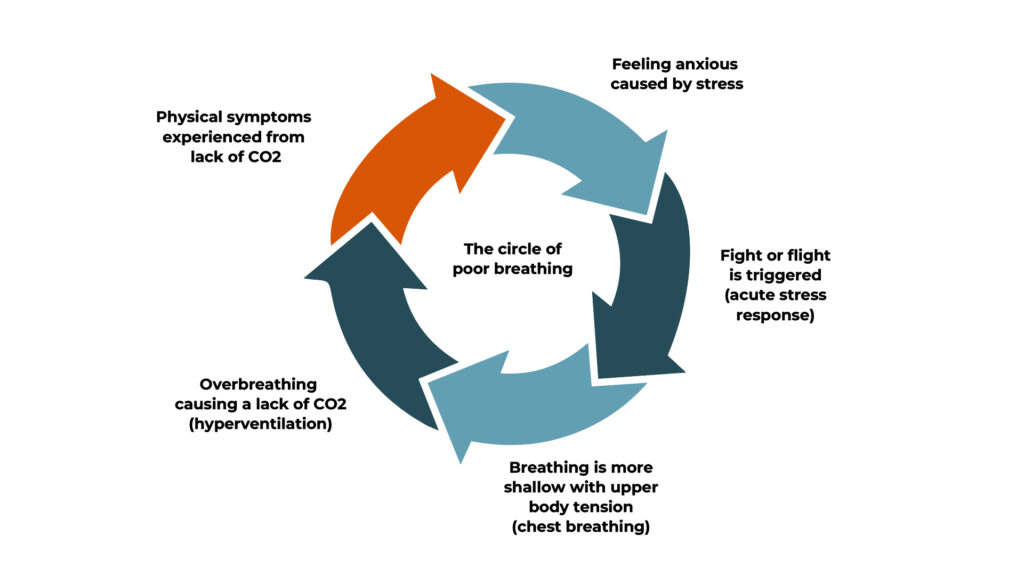
No doubt about it, how you breathe significantly impacts your cardiovascular health – for better or worse! Shallow breathing can exacerbate high blood pressure by activating the stress cycle, releasing stress hormones and making your body (and your heart) generally work harder.
The average person breathes between 12-18 breaths per minute. Average, however, doesn’t mean good. 80% of humans on the planet today are breathing dysfunctionally, or over-breathing’ causing greater wear and tear on their systems. You guessed it – it’s not good news!
“Over-breathing” is a term coined by experts like Johannes Egberts, founder of Breathless Expeditions and breathwork coach to the “who’s who” of athletes, performers and leaders, to describe the dysfunctional way of breathing that most humans today are using to get by – breathing shallow, fast, and too frequently.
The down side and danger of habitually dysfunctional over-breathing is that it creates a stress cycle which is deleterious to health across the board, including pushing blood pressure up.
Slow breathing on the other hand has the opposite effect. It’s defined as breathing between 6 to 10 breaths per minute, with a prolonged exhalation. When you engage in slow, deep breathing, the stress cycle can be reversed.
Deep breathing induces relaxation, calms brain activity, releases feel-good hormones, and lowers your blood pressure – it’s more than just filling your lungs with air.
Want to practise slow breathing? Check out our video below on slow breathwork to calm the nervous system.
How Breathing Exercises Can Lower Blood Pressure
As you slowly inhale, your diaphragm contracts and moves downward, fully expanding your lungs and stimulating the vagus nerve, which triggers the “rest and digest” response of your nervous system. This allows more oxygen to reach your body and brain, increasing the release of endorphins and reducing stress hormones like epinephrine.
When you exhale, your diaphragm moves back up, slightly raising your blood pressure. To balance this, your nervous system lowers your heart rate and widens blood vessels, further promoting relaxation. Extending your exhalation maximises this calming effect.
So ultimately, breathing exercises help lower blood pressure by:
1. Activating the Parasympathetic Nervous System
The autonomic nervous system has two main branches: the sympathetic nervous system (responsible for the “fight or flight” response) and the parasympathetic nervous system (responsible for the “rest and digest” response).
Deep breathing activates the parasympathetic nervous system, which has several beneficial effects on the body:
Slows the Heart Rate: By engaging the parasympathetic nervous system, deep breathing helps slow the heart rate. A slower heart rate reduces the force with which blood is pumped through the arteries, thereby lowering blood pressure.
Promotes Relaxation: Activation of the parasympathetic nervous system induces a state of relaxation, which counteracts the stress response that often leads to elevated blood pressure.
2. Increasing Oxygenation
Deep breathing increases the amount of oxygen that enters the lungs and, subsequently, the bloodstream. Enhanced oxygenation has the following effects:
Enhanced Cellular Function: Improved oxygen delivery to cells throughout the body ensures that they function optimally, including the cells in the cardiovascular system.
Vasodilation: Higher oxygen levels promote the release of nitric oxide, a molecule that relaxes and dilates blood vessels. This vasodilation reduces resistance within the arteries, helping to lower blood pressure.
Want To Start Your Breathwork Journey Today For Free?
This concise online program bridges the gap between ancient principles and scientific explanations. clear, simple, and immediately applicable to your life, due to 7 super effective guided exercises.
Cortisol is a hormone released in response to stress. Chronic stress and high cortisol levels are linked to elevated blood pressure. Deep breathing helps to reduce cortisol levels in several ways:
Stress Reduction: Deep breathing techniques lower the body’s stress response, thereby reducing cortisol production.
Improved Emotional Regulation: Consistent practice of deep breathing can enhance emotional regulation and resilience, leading to overall lower stress levels and reduced cortisol over time.
4. Balancing the Autonomic Nervous System
Deep breathing promotes a balance between the sympathetic and parasympathetic nervous systems. This balance is crucial for maintaining stable blood pressure:
Reduced Sympathetic Activity: The sympathetic nervous system increases heart rate and constricts blood vessels, raising blood pressure. Deep breathing reduces sympathetic activity, which helps lower blood pressure.
Enhanced Parasympathetic Activity: By enhancing parasympathetic activity, deep breathing helps maintain a calm and steady heart rate, promoting lower blood pressure.
5. Improving Heart Rate Variability (HRV)
Heart Rate Variability (HRV) is the variation in the time interval between heartbeats. A higher HRV is a marker of good cardiovascular health and autonomic nervous system balance. Deep breathing can improve HRV in the following ways:
Increased Vagal Tone: Deep breathing enhances vagal tone (activity of the vagus nerve), which is associated with better HRV and cardiovascular health.
Resonance Breathing: Practices like resonant or coherent breathing, which involve breathing at a rate of around five breaths per minute, optimise HRV and contribute to lower blood pressure.
Is Breathwork As Effective as Blood Pressure Medication?
A recent study by the Journal of the American Heart Association found that by strength-training their breathing muscles, with five minutes of breathing exercises six days per week, test subjects experienced similar improvements to walking 30 minutes per day or taking blood pressure medication. How it works: deep breathing exercises relax your involuntary nervous system, helping regulate your heart and other bodily functions.
6 Simple Breathing Techniques Scientific to Lower Your Blood Pressure
Ready to discover the most effective breathing exercises for lowering blood pressure? Let’s dive in and break down how to do them step by step. What’s great about these techniques is that they’re simple, easy to incorporate into your day, and you can start benefiting from them right now.
1. Diaphragmatic Breathing
Diaphragmatic breathing, or “belly breathing,” is one of the most well known deep breathing techniques. When you do diaphragmatic breathing, you engage your diaphragm, a powerful muscle at the base of your lungs. Also known as abdominal breathing or belly breathing, this technique has been shown to help lower blood pressure and heart rate, and it’s especially beneficial for people with lung conditions.
How to practise:
Sit or lie down in a comfortable position. If lying down I suggest having your knees bent to help relax your belly.
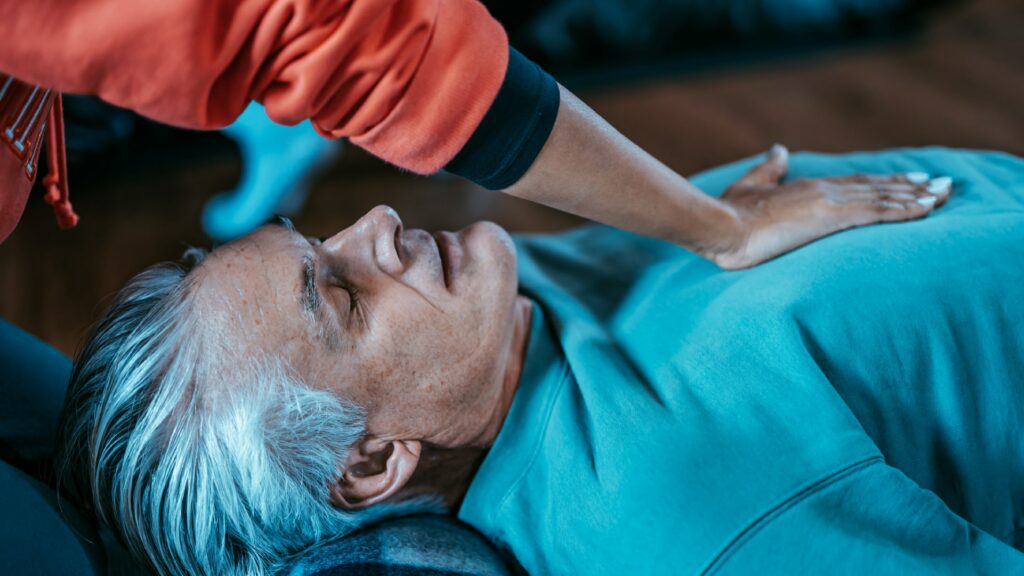
Place one hand on your chest and the other on your abdomen.
Inhale deeply through your nose, letting your abdomen rise more than your chest.
Exhale slowly through your mouth.
Repeat for 5-10 minutes.
Benefits:
– Enhances lung capacity.
– Promotes relaxation.
– Lowers blood pressure by improving oxygen exchange.
Useful Tip: if you struggle to breathe down deeply into your belly then use your hands as resistance. Place them on your belly (or your rib cage on each side) and gently aim to push your belly or ribs into your hands as you inhale. This will help engage your diaphragm and help you breathe in more deeply.
Breathe out fully: breathing all the way out – keep going until there’s nothing left – will create a deeper belly breath.
When to When to try it:
Anytime and anywhere. If you’re in a stressful situation, no one even needs to know you’re practising. Using it for just a few minutes a day will allow you to better tap into it in times of stress!
2. 4-7-8 Breathing
This technique is excellent for calming the nervous system and inducing relaxation. The longer exhalation helps to release stress and lowers blood pressure.
How to practise:
Sit or lie down comfortably with your back straight.
Inhale quietly through your nose for 4 seconds.
Hold your breath for 7 seconds.
Exhale completely through your mouth for 8 seconds.
Repeat for 4-8 cycles.
Benefits:
– Reduces stress and anxiety.
– Slows the heart rate.
– Helps in lowering blood pressure.
When to try it:
Who needs sheep? 4-7-8 breathing has been shown to help you get a good night’s sleep by calming the mind, reducing anxiety and decreasing heart rate and blood pressure.
3. Alternate Nostril Breathing
An ancient yoga practice, this technique balances the nervous system and promotes calmness. Also known as channel-clearing breath in yoga, alternate nostril breathing or Nadī Shodhana has been hailed for its ability to balance energy flow with studies suggesting it can enhance focus and energy levels, leaving you both calm and invigorated.
You simply breathe in through one nostril and out through the other, alternating between them. It might take a few tries to get it flowing, but once you do, it’s a game-changer for relaxation.
How to practise:
Sit comfortably and close your eyes.
Close your right nostril with your right thumb.
Inhale slowly yet deeply through your left nostril.
Close your left nostril with your right ring finger and release your right nostril.
Exhale through your right nostril.
Inhale through the right nostril, close it, and then exhale through the left nostril.
Repeat for 5-10 cycles.
Benefits:
– Balances the left and right hemispheres of the brain.
– Reduces stress.
– Lowers blood pressure by promoting a balanced autonomic nervous system.
When to try it:
Take a break in the middle of a stressful workday to use this technique for a bit of yogic zen, or before a big presentation to get yourself feeling clear-headed and ready to conquer the world.
4. Pursed Lip Breathing
Pursed lip breathing is a simple technique that helps to slow down your breathing rate by providing some resistance to your out-breath and it also improves oxygen intake. It’s been shown to benefit people with lung conditions, like asthma and pulmonary fibrosis, who experience breathing troubles.
How to practise:
Sit or lie down comfortably.
Inhale deeply through your nose.
Pucker your lips as if you are going to whistle.
Exhale slowly through your pursed lips.
Repeat for 5-10 minutes.
Benefits:
– Improves lung function.
– Reduces shortness of breath.
– Helps lower blood pressure.
When to try it:
Try it anytime, especially if you are losing your cool. Slowing down your exhalation will give you a sense of calm, a point of focus and will switch on the relaxation response.
5. Humming While Exhaling
Adding a humming sound to your exhale can increase nitric oxide production, which helps to dilate blood vessels and leads to lower blood pressure. The resistance created by humming also lengthens the exhalation, promoting relaxation.
How to practise:
Sit comfortably and take a deep breath in through your nose.
Exhale slowly, making a humming sound. Keep your jaw relaxed and mouth soft.
Repeat for 5-10 minutes.
Benefits:
– Improves airflow in the nasal passages.
– Promotes relaxation.
– Helps lower blood pressure.
When to try it:
Anytime and anywhere. Busy mind, can’t switch off? Ideal timing. It doesn’t even need to be a loud hum…as long as you’re humming, you’re good!
6. Coherent Breathing
The HeartMath Institute has conducted extensive research on coherent breathing and its effects on health, particularly blood pressure and stress reduction. Their studies show that coherent breathing can:
Increase heart rate variability (HRV), which is a marker of good cardiovascular health.
Promote a state of coherence, where the heart rhythms are smooth and regular.
Reduce cortisol levels, thereby lowering stress.
Key Findings:
Coherent breathing balances the autonomic nervous system.
Regular practice can lead to significant reductions in blood pressure.
It helps in reducing stress and anxiety, contributing to overall well-being.
How to practise:
Sit or lie down where you won’t be disturbed, close your eyes and relax.
Focus on your heart space by bringing your attention to the centre of your chest.
Imagine breathing in oxygen (and chi: life force energy) directly into your heart as you inhale.
As you exhale keep the focus on your heart and imagine the air coming out from this space.
Breathe at a Consistent Rate:
Inhale through your nose slowly for 5 seconds, keeping the breath soft and relaxed.
Exhale through your nose slowly for 5 seconds, letting the breath trickle out.
Make the breath circular, without any pauses.
As you breathe, invite a positive emotion like appreciation or gratitude into your heart.
Maintain this rhythm for several minutes.
When to try it:
Mornings are ideal – start your day feeling calm, connected and positive. Use before any spiritual practices to help you drop in. Use it before bed, to allow for a deeper sleep.
Want To Start Your Breathwork Journey Today For Free?
This concise online program bridges the gap between ancient principles and scientific explanations. clear, simple, and immediately applicable to your life, due to 7 super effective guided exercises.
The science says it all – breathing exercises are a natural and effective way to lower blood pressure and reduce stress. By understanding and harnessing the power of the breath’s effects on the parasympathetic nervous system, you can significantly improve your heart health and well-being just by using the power of your breath. So, now you have the wrap on the best breathing exercises to lower blood pressure, take a deep breath in, and a slow breath out, and embrace the life-changing potential that each breath offers.
Medical Disclaimer:
The information provided in this article is for educational and informational purposes only and is not intended as medical advice. Breathwork can support relaxation and well-being, but it is not a substitute for professional medical treatment or advice. Always consult with a healthcare provider before beginning any new wellness practice, especially if you have any pre-existing medical conditions or concerns, including high blood pressure. If you experience any adverse symptoms while practicing breathwork, discontinue immediately and seek medical attention. The authors and publishers of this content are not responsible for any actions taken by readers based on this information.
Written by
Anya Brand
Anya is a yoga & IRest meditation teacher, breathwork instructor, divemaster and writer, ocean lover and solo adventurer.
She thrives on change and transformation, and spends part of her year working and living in the Amazon with indigenous doctors, learning about their system of healing, and helping to facilitate transformational retreats.
Ever wondered if the simple act of breathing could be a game-changer for your blood pressure? It might sound too good to be true, but science says otherwise. Infact, a ...
Breathwork has never been more popular. From corporate wellness programs to trauma-informed therapy, people are turning to the breath as a tool for stress relief, energy, emotional release and even ...
Heart rate variability (HRV) might sound like something meant for athletes or biohackers, but it’s far more universal than that. HRV is one of the simplest, most powerful indicators of ...
The practice of breathwork dates back thousands of years, and has been used across cultures to calm the mind, connect with the body, and shift emotional states. In recent years, ...
So, you’re interested in breathwork. You’ve been reading about it, or maybe even tried it yourself, and are interested in learning more about the different types of breathwork and how ...
If you’ve never practiced breathwork, you’ve probably asked yourself – is it legit? Is it scientifically proven? And, does breathork actually work?? These are important questions if you’re considering trying ...
Imagine a journey needing no suitcase or passport, just the air in your lungs. Holotropic breathwork offers such a trip! It can be a profound exploration, similar in many ways ...
Key points Breathwork can elevate your energy levels and make your mornings more vibrant. Six simple breathwork techniques for energy to supercharge your mornings and fuel your day. Breathwork can ...
Over the past decade, the Wim Hof Method of breathwork has gained widespread popularity all across the world. If you’re familiar with Wim Hof, there’s no doubt you’ve seen read ...