

Breathing Exercises to Increase Heart Rate Variability

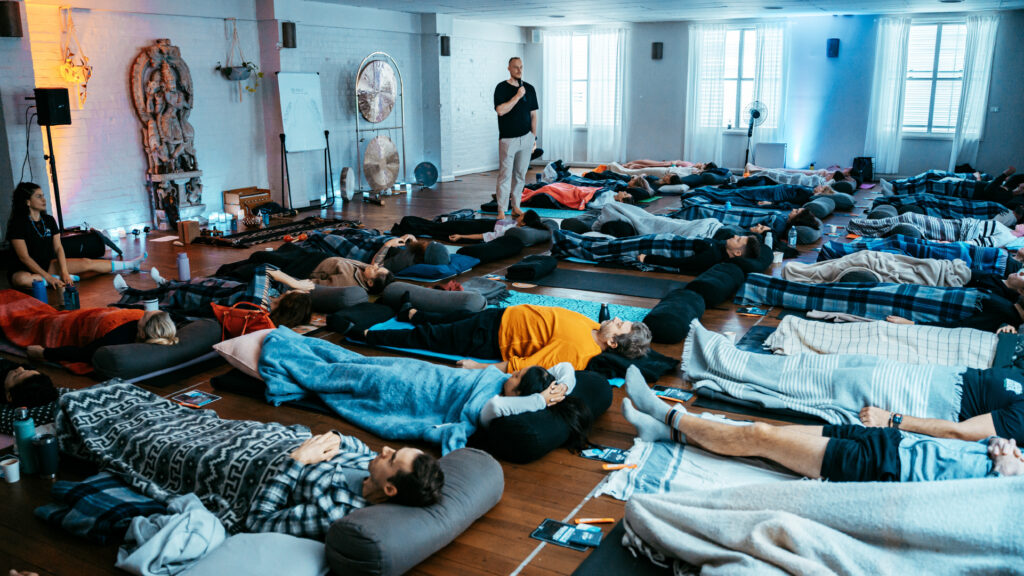
2 People sitting down practicing breathing to increase their heart rate variability

Heart rate variability (HRV) might sound like something meant for athletes or biohackers, but it’s far more universal than that. HRV is one of the simplest, most powerful indicators of how your body handles stress, recovers, and adapts to daily life – and it’s quickly becoming a popular way to track your overall health.

And here’s the part most people miss: one of the most accessible ways to influence your HRV, without gadgets, supplements, or a full lifestyle overhaul, is through your breath.

This guide breaks down HRV in human terms, outlines breathing exercises that will increase your HRV, unpacks the research, and gives you practical tools you can start using today.

What is Heart Rate Variability (HRV)?

A graphic showing a human heart and the hearts beats

HRV measures how much the time between your heartbeats naturally changes. These tiny shifts are controlled by your autonomic nervous system – the part of your body that keeps your stress and relaxation responses in balance. Higher HRV usually means your body is recovering well and handling stress effectively, while lower HRV can indicate strain, tiredness, or illness.

In basic terms, Heart Rate Variability is the variation in time between each heartbeat.

If your heart beats 60 times per minute, it doesn’t beat once every second like a metronome. Some beats might be 0.95 seconds apart. Others 1.05. That subtle variability is HRV.

Why Does HRV Matter?

Heart Rate Variability reflects how well your autonomic nervous system (ANS) is balancing two forces:

  • Sympathetic (your ‘fight-or-flight’ response).
  • Parasympathetic (your ‘rest-and-digest’ response).

A higher HRV generally means your body is more resilient, adaptable, and capable of shifting gears between stress and recovery.

A lower HRV is often a sign of stress, fatigue, or poor recovery capacity.

In simple terms, think of HRV like the rhythm of your favourite song. A healthy song has texture, soft beats, loud beats, pauses, flow. A heart with good HRV works the same way: flexible, responsive, musical. A heart under stress is more like a stuck metronome – rigid, repetitive, one-note.

Common HRV Metrics

  • SDNN: overall variability; long-term stress and recovery indicator.
  • RMSSD: short-term variability; reflects vagal (parasympathetic) activity – used by most wearable devices.
  • pNN50: percentage of successive heartbeats that differ by more than 50ms – higher = healthier.

What Influences HRV

HRV can be influenced by a number of physiological, lifestyle, environmental and health and medical factors, including:

  • Age: naturally decreases over time.
  • Fitness: higher in athletes and trained individuals.
  • Stress: emotional or physical stress lowers HRV.
  • Sleep: poor sleep decreases HRV as HRV is generally higher during sleep.
  • Illness: HRV often drops before symptoms appear.
  • Hormone levels: estrogen generally increases HRV, while progesterone typically decreases it.
  • Pain: pain can cause lower HRV.
  • Temperature: being in heat tends to lower HRV, while cold has a smaller impact.
  • Noise & air quality: exposure to poor air quality and noise can affect HRV.
  • Substances: caffeine, alcohol and smoking can lower HRV.
  • Genetics: genetics play a key role in determining your baseline HRV.

Normal HRV Ranges

There’s no universal “normal” HRV range as it’s incredibly individual. Some people naturally sit below 20 milliseconds, while others sit well over 200. While averages for adults are often quoted in the 19-75 millisecond range, what matters most isn’t how you compare to others but what’s typical for you. Your personal baseline over time is the best indicator of your health.

How Breathing Affects HRV through the Nervous System

Breathing & HRV

Your breath has a direct hotline to your autonomic nervous system. Every inhale and exhale affects your heart rate, blood pressure, and nervous system in predictable ways.

Inhalation vs Exhalation
  • Inhale: heart rate slightly speeds up.
  • Exhale: heart rate naturally slows down.

This phenomenon is called respiratory sinus arrhythmia (RSA), and it’s a sign of healthy vagal tone.

Why Slow Breathing Boosts HRV

Slow, controlled breathing effects HRV by:

  • Activating the vagus nerve.
  • Enhancing parasympathetic activity.
  • Balancing the sympathetic system.
  • Improving baroreflex sensitivity (your body’s blood pressure feedback loop).

Breathing is essentially the steering wheel of your nervous system.

Research: What Science Says About Breathing and HRV

breathwork-and-anxiety

The results of a 2022 study on the effect of resonance breathing (a slow, controlled breathing technique) on Heart Rate Variability and cognitive functions in young adults found that:

  • Resonance breathing (20 minutes a day for 4 weeks) significantly improved HRV.
  • The control group showed no HRV changes, confirming the effect came from the breathing practice.
  • Breathing at around 6 to 6.5 breaths per minute created the strongest improvements.
  • Participants who practiced resonance breathing showed better cognitive performance.
  • Stress levels dropped significantly in the breathing group but not in the control group.
  • Overall, the breathing practice increased parasympathetic activity (rest-and-digest) and reduced sympathetic dominance.
  • Researchers concluded that daily resonance breathing can improve HRV, reduce stress, and support cognitive function.

Best Breathing Techniques to Increase HRV

Below are some of the most effective, research-backed (and beginner-friendly) breathing exercises to improve HRV.

1. Coherent/Resonance Breathing

Rate: 5.5 to 6 Breaths per minute
How: 5-second inhale and then a 5-second exhale.
Why: Maximises vagal stimulation; used in HRV biofeedback.
When: Daily, or during stress recovery.

2. Diaphragmatic/Belly Breathing

How:

  • One hand on your chest, one on your belly.
  • Breathe in so the belly moves first.
  • Slow, gentle breaths.

Why: Reduces anxiety and improves oxygenation.
When: Great for beginners, morning routines, or before bed.

3. 4-7-8 Breathing

How:

  • Inhale for 4 seconds.
  • How for 7 seconds.
  • Exhale for 8 seconds.

Why: Deep relaxation, helpful for acute stress.
When: During times of stress, or any time you feel you need a reset.

4. Box Breathing

How:

  • Inhale for 4 seconds.
  • How for 4 seconds.
  • Exhale for 4 seconds.
  • How for 4 seconds.

Why: Used by military and high-performance coaches.
When: Before presentations, training, or stressful tasks.

5. Alternate Nostril Breathing

How: Close one nostril, inhale; switch; exhale. Repeat the opposite.
Why: Can improve focus and nervous system balance.
When: Any time you’re feeling overwhelmed or your nervous system needs regulating.

Technique Comparison Table

TechniqueBreath RateBest ForNotes
Resonance-6/minHRV & vagal toneMost studied
DiaphragmaticVariableAnxiety, groundingBeginner-friendly
4-7-8-4/minRelaxationLong exhales
Box-4/minFocus, stress resilienceStructured
Alternate NostrilSlowedCalm & clarityYogic tradition

How to Measure and Track HRV While Practicing Breathwork

Tracking HRV helps you see if your practice is working. Popular devices that help you track your Heart Rate Variability include:

  • The Oura Ring – excellent overnight RMSSD.
  • WHOOP – recovery-focused, detailed trends.
  • Apple Watch – convenient but variable.
  • Elite HRV app – needs to be paired with a chest strap.
  • Polar H10 strap – highly accurate for spot measurements.

A watch that tracks heart rate variability

When to Measure your HRV

  • Morning (best baseline).
  • During sleep.
  • Before or after breathwork sessions.

Tips for Measuring your HRV

  • Measure it at the same time each day.
  • Take your measurements while you’re relaxed.
  • Look for trends, not daily perfection.

Practical Tips and Mistakes to Avoid

Do’s:

  • Start small: 3 – 5 minutes a day.
  • Prioritise long, relaxed exhales.
  • Sit comfortably with good posture.
  • Practice at the same time each day.

Don’ts

  • Don’t force or overinflate your breath.
  • Don’t breathe too quickly.
  • Don’t push breath holds if dizzy.
  • Don’t practice during times of stress, driving, or high-risk situations.

Also remember: breathing is powerful, but sleep, movement, and recovery matter too when it comes to Heart Rate Variability.

Summary and Key Takeaways
  • HRV measures your nervous system’s flexibility and resilience.
  • Breathing is one of the fastest, simplest ways to improve HRV.
  • Slow, controlled breathing enhances vagal tone and reduces stress.
  • Trends matter more than single HRV readings.
  • Consistency beats intensity – 5 minutes daily is enough to start seeing change.

Breathing is free, it’s accessible, and it’s one of the most powerful tools you have to support long-term health.

FAQs on Heart Rate Variability
1. What is HRV and how is it measured?

It’s the variation in time between heartbeats, measured through metrics like RMSSD or SDNN using an EGC, or wearable devices.

2. How long until I see HRV improvements?

Some people notice changes within 1 – 2 weeks. Trends over a month are more reliable.

3. What’s the best breathing technique to start with?

Diaphragmatic breathing if you’re new; coherent breathing if you’re ready for structured practice.

4. Can I use apps or wearables to track progress?

Yes, there are many wearable devices on the market that can help you track your HRV including the WHOOP,  the Oura Ring, the FitBit and the Apple watch can all track Heart Rate Variability. 

5. Is HRV a reliable sign of health?

It’s a strong indicator of stress, recovery, and nervous system balance, but it’s just one piece of the puzzle, not a diagnosis.

This article is for informational purposes only and is not intended to diagnose, treat, cure, or prevent any disease. It should not be used as a substitute for professional medical advice, diagnosis, or treatment. Always consult your doctor or another qualified healthcare provider before beginning any new breathing practice, exercise program, or health routine, especially if you have a heart condition, respiratory issues, high or low blood pressure, or any existing medical concerns. 

Johannes’s inspiring life journey is punctuated by seeking the positives in every situation, a thirst for self-discovery and a love for unconventional experiences.

Despite a challenging childhood, he discovered something unexpected that would alter the direction of his life forever – controlled breathing.

Breathwork immediately resonated with Johannes, and he relentlessly cultivated knowledge on the subject from brilliant minds such as Wim Hof, Laird Hamilton etc and acquired more than ten breathwork certifications.

His holistic wellness brand, Breathless Expeditions, has led the breathwork movement in Australia and inspired thousands of people across the globe since 2018.

With world-renowned clientele such as David Goggins, Ludovico Einaudi, A-League Sports Teams, and some of Australia’s largest companies including PwC’s The Outside event flipping professional development, team building and life reslience experiences on its head, the future is brighter than ever for Johannes and Breathless.

For additional inspiration visit his youtube channel.

Breathless Journal