Benefits of Breathwork for Mind and Body

Benefits of Breathwork

Breathwork has become a cornerstone of modern wellbeing, and for good reason. Used intentionally, some of the benefits include improving mental clarity, supporting emotional balance and enhancing physical health.

Unlike automatic breathing, breathwork is a conscious practice. By changing how we breathe, we can directly influence how our body and mind respond to everyday challenges.

Below, we explore the key benefits of breathwork, how it works in the body, and how to get started.

What is Breathwork?

Breathwork refers to a range of intentional, conscious breathing practices designed to influence physical, mental and emotional states.

Rather than breathing on autopilot, breathwork involves deliberately controlling the rhythm, depth and pattern of the breath to support relaxation, focus or emotional regulation.

Breathwork vs Automatic Breathing

Most people breathe unconsciously, often shallowly – especially when under stress. Breathwork differs because it brings awareness to the breath and uses specific techniques to achieve specific outcomes such as nervous system regulation, improved heart rate variability or blood pressure, or emotional release.

What are the Actual Benefits of Breathwork?

Physical Benefits of Breathwork

Breathwork has such wide-ranging benefits because it directly affects core physiological systems.

Nervous System Regulation

Slow breathwork techniques stimulate the parasympathetic nervous system, the branch responsible for rest, recovery and digestion. This helps counteract the stress-driven “fight or flight” response.

Oxygen, Carbon Dioxide and Heart Rate

Breathing patterns influence:

  • Oxygen delivery to cells.
  • Carbon dioxide tolerance.
  • Heart rate variability.

Slower, controlled breathing helps stabilise heart rate and supports cardiovascular health. There are also exercises that positively influence heart rate variability (HRV) – a key marker of nervous system balance and overall cardiovascular health. Slow, controlled breathing, particularly with longer exhales, stimulates the parasympathetic nervous system, which helps the heart adapt more efficiently to physical and emotional demands. Over time, regular breathwork practice can increase HRV, indicating greater resilience to stress, improved recovery, and a healthier connection between the heart and nervous system. Higher HRV is commonly associated with better emotional regulation, enhanced physical performance, and reduced risk of stress-related health issues.

Increased Levels of Energy

Breathwork can increase energy levels by improving how efficiently the body breathes. The respiratory system plays a central role in energy production by delivering oxygen to cells and removing carbon dioxide. When breathing is shallow or inefficient – which is common under stress – this vital exchange is reduced, limiting the body’s ability to produce and sustain energy.

Deep breathing practices, such as diaphragmatic or nasal breathing, improve breathing efficiency by optimising oxygen uptake and carbon dioxide balance. This supports cellular metabolism and helps the body use oxygen more effectively.

As a result, muscles and organs receive the fuel they need to function at their best, often leading to increased energy, reduced fatigue, and a greater sense of physical vitality.

Better Respiratory Function

There are a number of breathing exercises for asthma that can help improve respiratory function. These include diaphragmatic, nasal, pursed-lip and Buteyko breathing. These techniques encourage slower, deeper and more efficient breathing, which can strengthen the diaphragm, reduce overbreathing and improve the body’s tolerance to carbon dioxide. Over time, this leads to better oxygen utilisation, reduced breathlessness and a more balanced breathing pattern – supporting overall lung efficiency and day-to-day respiratory health.

Mental Health Benefits of Breathwork

One of the most well-known benefits of breathwork is its impact on mental and emotional wellbeing.

Stress Reduction

Breathwork is a powerful tool for stress relief, using slow, intentional breathing to activate the parasympathetic nervous system – the body’s natural “rest and digest” response. By slowing the breath and extending the exhale, the body receives signals of safety, reducing stress hormones like cortisol while supporting calming neurotransmitters. This physiological shift helps relax the mind and body, ease muscle tension, lower blood pressure, and create a lasting sense of calm and wellbeing.

Anxiety Relief

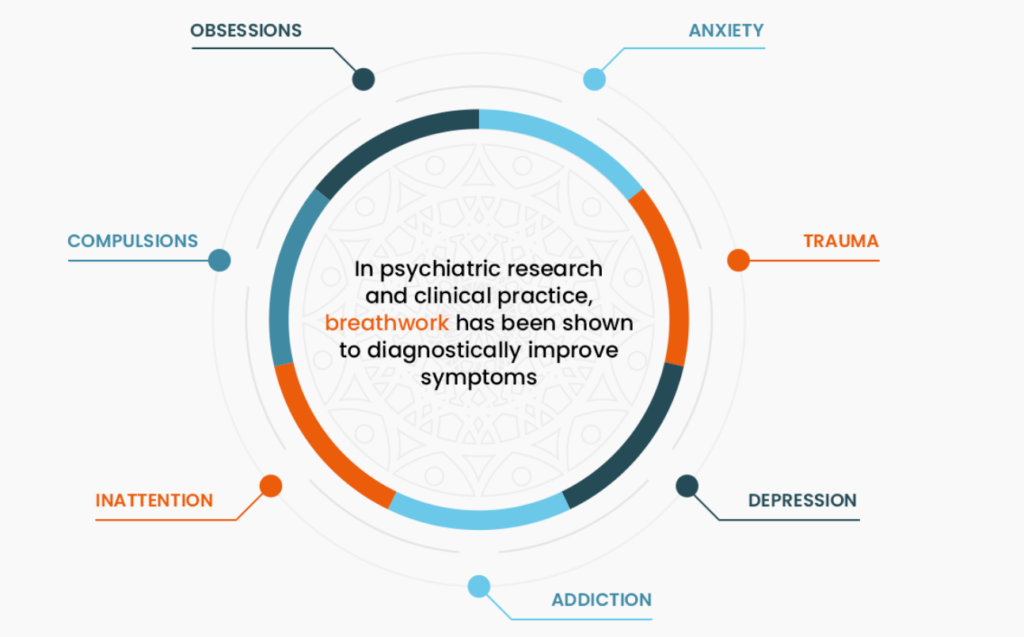
Breathing techniques are commonly used to manage anxiety by interrupting cycles of rapid, shallow breathing that reinforce anxious thoughts and physical symptoms. A study published in Brain Sciences in 2023 found that breathwork was not only effective in the treatment of anxiety, but also depression, ADHD, trauma, compulsion, addiction and obsessions.


Emotional Regulation

Regular breathwork practice improves emotional awareness and resilience, making it easier to respond rather than react to challenging situations by supporting healthier nervous system regulation.

Relaxation and More Zzz’s

Breathwork supports deep relaxation and better sleep by calming the nervous system and preparing the body for rest. As breathing slows and deepens, the parasympathetic nervous system is activated, helping to lower heart rate, relax muscles and reduce cortisol levels. This shift makes it easier to let go of stress and transition into more restorative, higher-quality sleep.

Strengthens the Mind-body Connection

Breathwork strengthens the mind-body connection by using the breath as a point of focused awareness. By paying attention to each inhale and exhale, you become more attuned to physical sensations, emotional shifts and mental patterns as they arise. Over time, this heightened awareness builds deeper self-connection and insight, helping you understand and respond to your internal state with greater clarity and balance.

Improves Mental Clarity

By calming mental noise, breathwork supports clearer thinking and sustained focus. It can help calm a scattered mind by anchoring attention to the natural rhythm of the breath. This present-moment focus reduces mental noise, quiets rumination and worry, and creates space for clearer thinking. As breathing slows and awareness deepens, cognitive clarity and mental focus naturally improve.

Mental vs Physical Benefits of Breathwork

Mental & Emotional Benefits of BreathworkPhysical Benefits of Breathwork
Stress reliefImproved respiratory function
Anxiety reductionSupports cardiovascular health
Emotional regulationBetter sleep quality
Improved focus and mental clarityIncreased energy levels

How to Get Started With Breathwork

The great thing about improving your mental and physical health through breathwork is that starting doesn’t require special equipment or long sessions.

Here are some beginner tips:

  • Practise in a quiet, comfortable space.
  • Start seated or lying down.
  • Breathe through the nose if comfortable.

Try Breathwork for Yourself

Want To Start Your
Breathwork Journey Today For Free?

This concise online program bridges the gap between ancient principles and scientific explanations. clear, simple, and immediately applicable to your life, due to 7 super effective guided exercises.

Duration

You can practice breathwork anywhere from a couple of minutes to 30 minutes, or longer. Starting off with shorter sessions may be helpful if you’re new to the practice or short on time.

Consistency

Regular practice matters more than duration. Even brief daily breathing exercises can deliver meaningful health benefits over time.

Below are some videos to get you started:

In a world that constantly pulls attention outward, the breath offers a simple way to return to yourself. With just a few conscious breaths, you can calm the nervous system, clear mental noise and restore balance.

Breathwork is a tool that creates the conditions for clarity, resilience and emotional steadiness to emerge naturally. Over time, even brief daily practice can provide benefits such as deeper calm, better sleep, improved focus and a stronger mind-body connection.

Your breath is always with you. With awareness, it becomes one of the best ways you can support your wellbeing.

Johannes’s inspiring life journey is punctuated by seeking the positives in every situation, a thirst for self-discovery and a love for unconventional experiences.

Despite a challenging childhood, he discovered something unexpected that would alter the direction of his life forever – controlled breathing.

Breathwork immediately resonated with Johannes, and he relentlessly cultivated knowledge on the subject from brilliant minds such as Wim Hof, Laird Hamilton etc and acquired more than ten breathwork certifications.

His holistic wellness brand, Breathless Expeditions, has led the breathwork movement in Australia and inspired thousands of people across the globe since 2018.

With world-renowned clientele such as David Goggins, Ludovico Einaudi, A-League Sports Teams, and some of Australia’s largest companies including PwC’s The Outside event flipping professional development, team building and life reslience experiences on its head, the future is brighter than ever for Johannes and Breathless.

For additional inspiration visit his youtube channel.

Breathless Journal